
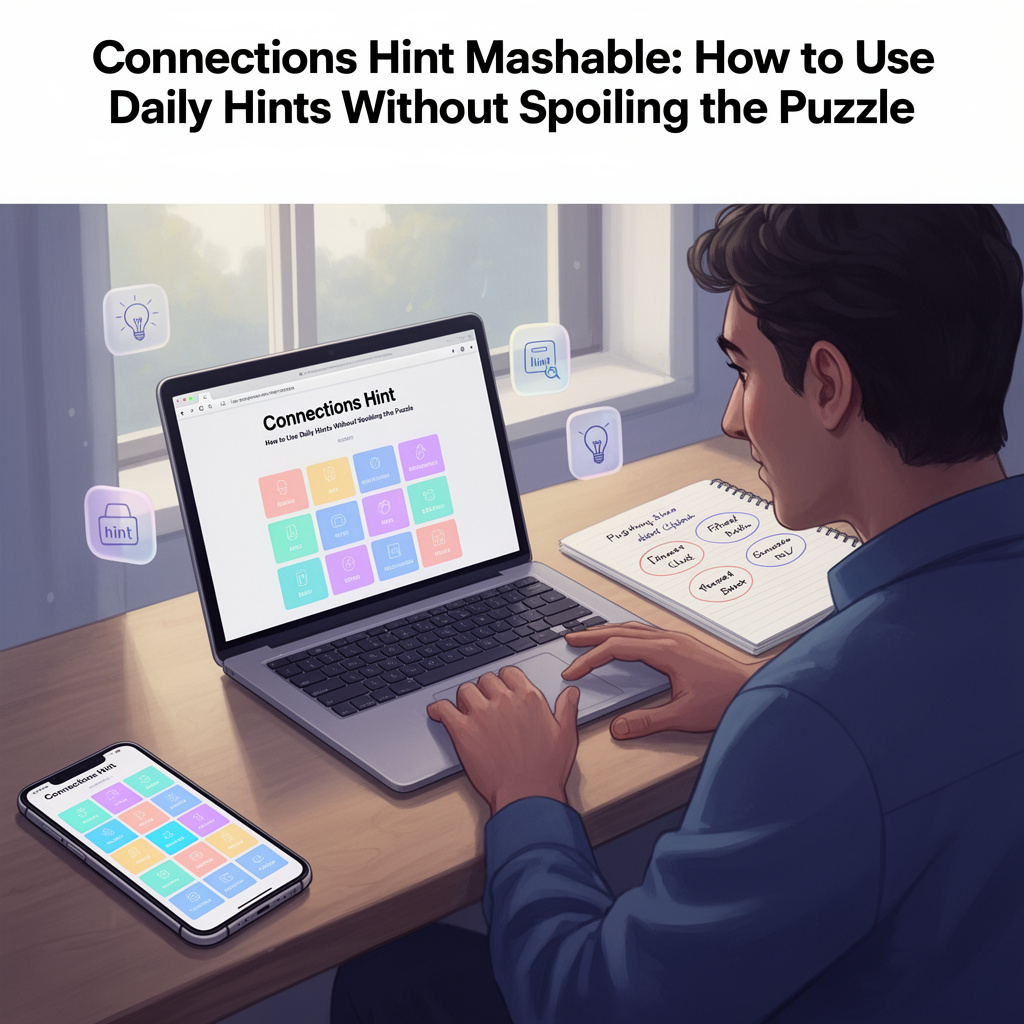
You have made three guesses. Two were wrong. Sixteen words are staring at you, and every one of them seems to belong in two places at once. So you open a new tab and type “connections hint mashable” into the search bar.
If that sounds like your morning, you are in good company. The NYT Connections game launched in June 2023 and quickly became a daily habit for people all over the world. If you like background stories, there is a good overview of the game on Wikipedia. And when the grid gets stubborn, many players turn to Mashable, which publishes a fresh set of hints and answers for the puzzle each day.
This guide explains what those hints are, how to use them without ruining the fun, and which solving habits will help you even on days with no hints at all.
What a Mashable Connections Hint Actually Is
A Connections hint is a small clue about the day’s puzzle. It does not hand you the four words. It nudges you toward the idea behind a group.
Mashable’s daily article usually follows a clear order. It opens with a short teaser line about how hard the board is. Then it gives a few gentle clues, often one for each color group. After that, it lists the category names, and at the very end it shows the full answers. This order is the whole point, because you can stop reading whenever you feel unstuck.
Think of it like a friend looking over your shoulder. A good friend does not grab the phone and finish the puzzle. They say, “Hmm, look at the words that could be verbs.” You still do the thinking, but you start from a better place.
How the Game Works, in Plain Words
If you are new to Connections, the rules are short. You see sixteen words in a grid, and you can play on the official NYT Connections page. Your job is to sort the words into four groups of four, and each group shares one link. When you pick four words and press submit, the game tells you if you are right. A correct guess locks in the group. A wrong guess costs one of your four lives, and when all four are gone, the game ends.
The groups are color coded. Yellow is meant to be the easiest, green is a step up, blue is harder, and purple is usually the trickiest, often built on wordplay. But the colors only show how hard the puzzle maker expected each group to be. Plenty of players breeze through purple and get stuck on yellow because one word has a sneaky second meaning.
What makes the game hard is overlap. Puzzle makers love to place a word that fits two groups, and they often include five or six words that could fit a single idea. Your real job is not to find words that fit. It is to find the one set of four that fits perfectly while the rest belong somewhere else.
Why So Many People Search for Mashable’s Hints
The puzzle resets once a day, so a fresh wave of people gets stuck every morning. Mashable is a well-known tech and culture site, and its puzzle write-ups have a steady format that readers learn to trust. You know where to scroll for the first clue and where to stop before the answers.
The teaser line at the top is useful too. It might say the puzzle is not too hard if you love a certain topic, which tells you whether to expect a quick win or a long fight. It also reminds you that these puzzles often lean on everyday interests like food, movies, sports, slang, or social media. And then there is the streak. Many players guard their winning streaks like treasure, and a small hint can save one.
Match the Date Before You Read Anything
This sounds obvious, but it trips people up. Every puzzle has its own number and date, and a hint for yesterday’s board is useless today. Check that the date at the top of the article matches your game. The new puzzle can also appear at a different clock time depending on where you live, so if you are in a far-off time zone, compare the puzzle number in the game with the one in the article.
How to Use Hints Without Ruining the Fun
The best way to use a hint is slowly. Start by playing on your own for a few minutes. Even if you feel lost, try to find one group. This warm-up makes the hint more useful, because you already know which words are confusing you.
Next, read only the first clue and cover the rest of the page. Look at the board and ask which words could match it. Do not submit yet. Just see if a pattern appears. If you are still stuck after a couple of minutes, move to a stronger clue or to the category name. A category name is a powerful tool. If you learn that one group is “things you can pull,” you can test every word on the board against that phrase.
Read the full answers only when you want to finish or learn. There is no shame in that, as long as you read them after a real effort and not before. Some players also set a simple rule, such as one hint per color or one hint per mistake. The exact rule does not matter, but choosing it before you start does, because it is much harder to be strict once you are frustrated.
What Different Kinds of Clues Are Telling You
Once you read enough hints, you notice that they fall into a few types. Some point to a topic, like cooking, music, or school. These are the easiest to use, since you just scan the board for words that fit.
Other hints point to a meaning. They might say all four words can mean the same thing, like ways to say someone is clever. Here, a tool like the Merriam-Webster Thesaurus can help you practice spotting close links. Think about the different senses of each word, too. “Sharp” can describe a knife, a mind, or a taste. If a word feels odd, check the Merriam-Webster Dictionary to see its other meanings. You may be surprised by how many a simple word can have.
Some hints point to a pattern in how the words are built, such as each word fitting after the same word. These are the purple hints, and they feel strange at first. The key is to stop thinking about what the words mean and start thinking about how they look and sound. Two ideas come up often. One is the compound word, where two words join to make a new one, like “fire” and “fly.” The other is the homophone, where two words sound the same but mean different things, like “sea” and “see.”
Finally, a few hints point to a word type, like noticing that every word in a group is a verb. In that case, test each word in a quick sentence to see how it behaves.
A Made-Up Example to Show How It Works
Here is a small example. This board is invented for practice and is not from any real puzzle.
Imagine the grid holds the words CRUDE, FOUL, TAR, PITCH, KICK, SPIN, SHOT, and LOB. You might group CRUDE, FOUL, and TAR because they feel dark or dirty. But PITCH also fits with TAR, since both are sticky black substances, so now you have four words that seem to work.
Here is where a hint helps. Suppose the clue says one group is about ways to move a ball in sport. Suddenly KICK, SPIN, SHOT, LOB, and PITCH all look possible, which makes five candidates for one group. Since PITCH also fits the sticky group, it is probably the word doing double duty. That leaves KICK, SPIN, SHOT, and LOB as the sport group.
The lesson is simple. When five words fit one idea, the extra word usually hides a second meaning. Find that word and you have found the trap.
Habits That Make You Faster Without Any Hints
Hints are great, but the real goal is to need them less. The first habit is to say the rule out loud before you submit. If you cannot explain the link in one short phrase, the group is probably wrong. “Words that can follow the word fire” is a rule. “Things that are kind of similar” is not.
The second habit is to look for the odd words. A word that does not seem to fit anywhere is often part of the purple group or has an unusual second meaning. Ask yourself what else it can mean. The third is to study the leftovers. Each time you solve a group, look at what remains, because the smaller board often makes the right answers much clearer.
The fourth is the partner-word test. Pick a common word like ball, house, or light and see if it fits before or after several words on the board. If it works for three, the fourth may be hiding somewhere else. The fifth is to slow down when you have two lives left. Early on, a wrong guess is a cheap lesson. Late in the game, only submit groups you can defend.
It also helps to keep a tiny note after each game about what fooled you. After a couple of weeks, you will see a pattern, such as missing sound-based groups or struggling with slang. That tells you exactly what to practice. Playing with a friend helps too, since someone who loves sports or cooking will see things you miss.
Other Mashable Puzzle Help Worth Knowing About
Mashable does not only cover the main Connections game. It also posts help for other word games, including the Sports Edition of Connections and the Strands puzzle. It has also built a games hub with other free games, such as crossword and Sudoku. If you want even more to play after you finish, the NYT Games hub has a whole shelf of daily word and logic games to try.
Common Mistakes People Make With Hint Pages
A few habits can quietly spoil the experience. The first is scrolling too fast, since many articles show the answers right below the hints and it is easy to see a word by accident. Scroll in small steps and keep one hand ready to cover the screen.
The second is reading hints before you have even looked at the board, because then the clue has nothing to attach to. The third is treating the color order as a rule. Yellow does not have to come first, so start with the group you understand best. The fourth is guessing from a single clue. A hint narrows the field, but you should still test each word before you submit.
Frequently Asked Questions
Is it cheating to use a Connections hint? Not at all. The game is meant to be fun, and hints are a way to enjoy it when you are stuck. You are only competing with yourself.
Do Mashable’s hints give the answers right away? Usually not. Most articles start with soft clues and only reveal the words near the bottom, so you can stop when you feel unstuck.
Which group should I solve first? The one you understand best. Any group is fine if you can clearly explain its link.
What if I lose all four lives? The game shows you the answers. Take a moment to see why you missed each group, since that is where most of the improvement happens.
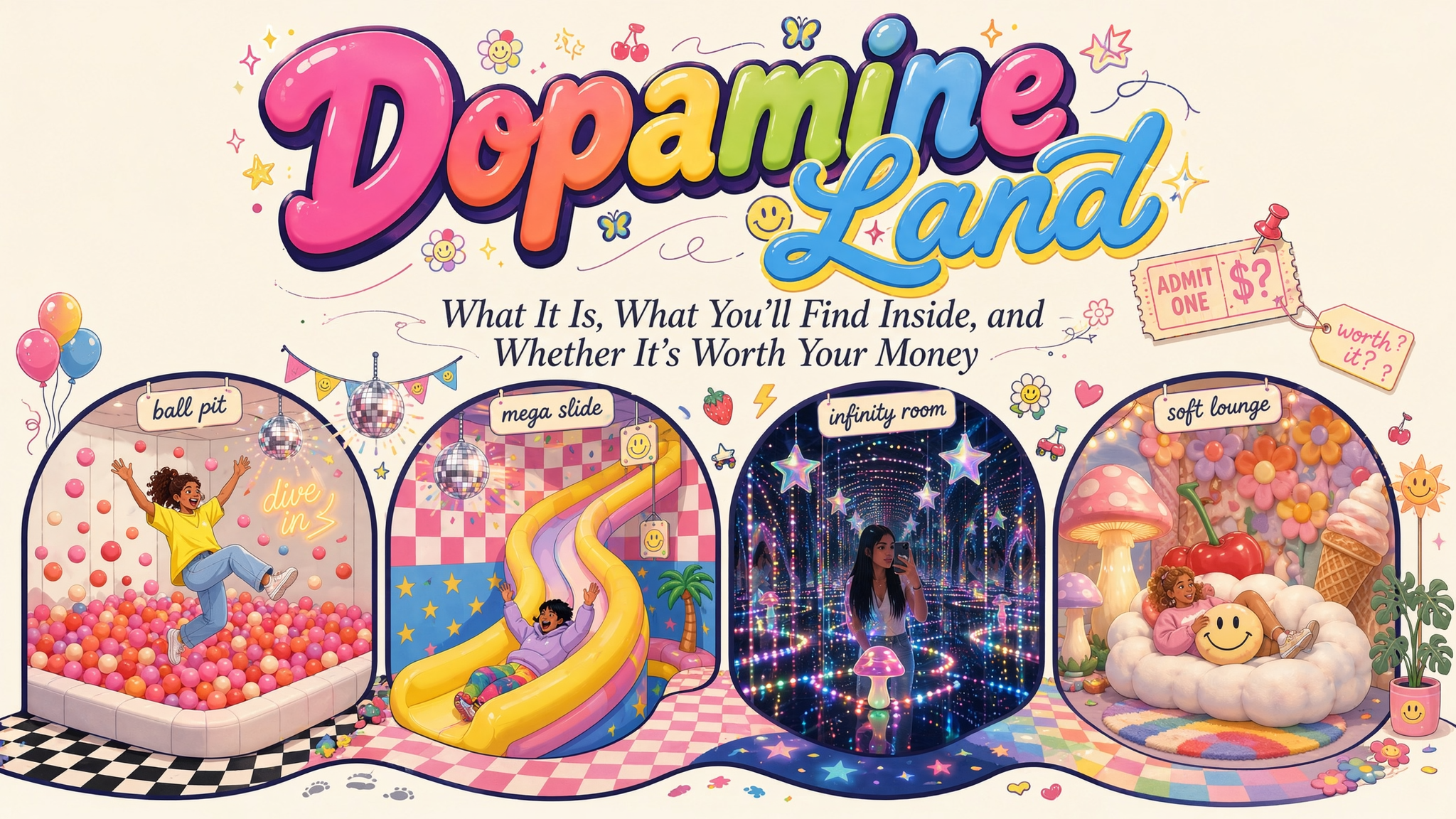
Read More: Dopamine land
Final Thoughts
A Connections hint from Mashable is a small tool that can save your streak and your mood. Used well, it works like a gentle push and not a shortcut. Check the date, read one clue at a time, and give yourself a few minutes between each step.
Over time, you will start to see patterns on your own. You will spot the word with two meanings before it tricks you, and you will find the odd group faster. Then the hints become a safety net you rarely need, and the daily puzzle becomes what it was always meant to be: a quick, satisfying break in your day.






Leave a Reply