

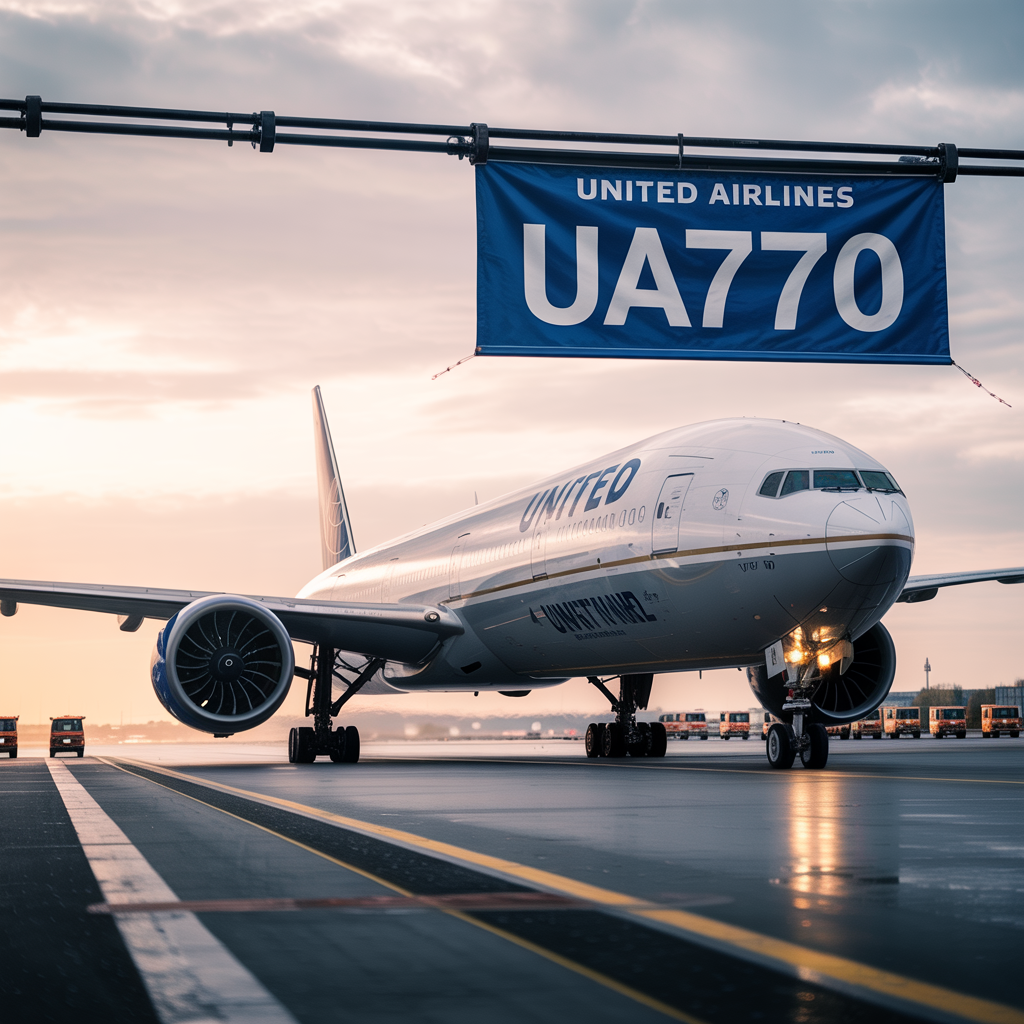
The United Airlines Flight UA770 emergency diversion became a widely discussed aviation event after the aircraft declared an in flight emergency and diverted from its planned route. According to multiple aviation reports, Flight UA770 was operating between Barcelona and Chicago when the crew identified a potential cabin pressurization issue and elected to divert to London Heathrow as a precautionary safety measure. The aircraft landed safely, with no reported injuries to passengers or crew.
Understanding what happened during the United Airlines Flight UA770 emergency diversion provides valuable insight into airline safety procedures, emergency response systems, pilot decision making, and passenger protection measures.
Overview of the United Airlines Flight UA770 Emergency Diversion
Commercial aviation operates under strict safety standards. When flight crews receive alerts involving critical systems such as cabin pressurization, they are trained to take immediate action.
During the United Airlines Flight UA770 emergency diversion, pilots reportedly received a warning associated with the aircraft’s pressurization system while cruising at altitude. Although reports indicate there was no complete loss of cabin pressure, the crew followed established safety procedures and diverted to the nearest suitable airport capable of supporting a wide-body aircraft and emergency response operations.
Key Flight Information
- Flight Number: UA770
- Airline: United Airlines
- Route: Barcelona to Chicago
- Aircraft Type: Boeing 787 Dreamliner
- Diversion Airport: London Heathrow
- Reported Trigger: Cabin pressurization system warning
- Outcome: Safe landing with no injuries reported
- Emergency Code: Squawk 7700 declared by the flight crew
What Is Squawk 7700?
One of the most searched questions related to the United Airlines Flight UA770 emergency diversion concerns the emergency code used by the pilots.
Squawk 7700 is the internationally recognized transponder code used to notify air traffic control that an aircraft is experiencing an emergency. When pilots select this code, controllers immediately provide priority handling and coordinate with emergency services.
The use of Squawk 7700 does not necessarily mean an aircraft is in immediate danger. It simply signals that the crew requires assistance, priority routing, or an expedited landing. In the case of UA770, the code allowed controllers to clear airspace and prepare Heathrow for the aircraft’s arrival.
Why Did Flight UA770 Divert to London Heathrow?
A common question is why the flight did not return to Barcelona or continue toward Chicago.
London Heathrow was likely selected because of several operational advantages:
- Multiple long runways suitable for Boeing 787 operations
- Extensive aircraft maintenance capabilities
- Large emergency response teams
- International passenger processing facilities
- Availability of replacement aircraft and crew support
For transatlantic flights, crews evaluate the nearest safe and practical airport rather than simply returning to their departure location. Heathrow represented the most suitable option based on location and available resources.
Understanding Cabin Pressurization Warnings
Modern airliners fly at altitudes exceeding 35,000 feet, where the outside air is too thin for normal breathing. Cabin pressurization systems maintain a comfortable and safe environment for passengers and crew.
When sensors detect abnormal readings, airlines follow a conservative safety philosophy. Even if a problem is only suspected, crews often divert to avoid unnecessary risk.
Potential causes of pressurization warnings include:
- Sensor malfunctions
- Air conditioning system irregularities
- Valve performance issues
- Software monitoring alerts
- Maintenance-related anomalies
Aviation safety regulations encourage pilots to act before a situation escalates. The United Airlines Flight UA770 emergency diversion demonstrates this preventive approach.
Passenger Experience During the Diversion
Passengers onboard reportedly experienced a controlled and orderly response.
Typical procedures during such events include:
- Crew communication with passengers.
- Coordination with air traffic control.
- Controlled descent if required.
- Preparation for diversion and landing.
- Emergency services standing by as a precaution.
Most emergency diversions are precautionary rather than catastrophic. Aviation professionals train extensively for these situations, enabling calm and efficient handling of unexpected events.
How Aviation Safety Systems Worked
The United Airlines Flight UA770 emergency diversion highlights several layers of aviation safety:
Pilot Training
Commercial airline pilots undergo recurrent simulator training that includes:
- Pressurization failures
- Engine abnormalities
- Electrical malfunctions
- Medical emergencies
- Diversion decision-making
Aircraft Monitoring Technology
The Boeing 787 Dreamliner uses advanced diagnostic systems that continuously monitor aircraft performance and alert crews to potential issues before they become serious.
Air Traffic Control Coordination
Controllers rapidly assist aircraft declaring emergencies by:
- Clearing airspace
- Prioritizing landing sequences
- Coordinating airport emergency services
- Providing weather and runway information
These systems worked together to ensure a safe outcome for Flight UA770.
London Travel Information for Passengers During Diversions
Because Heathrow served as the diversion airport, affected travelers found themselves unexpectedly in London. Visitors facing overnight delays can take advantage of several nearby transportation options.
Popular London attractions include:
- Tower of London
- Buckingham Palace
- British Museum
- West End
Summer 2026 visitors can also expect busy tourist activity around central London, making advance transportation planning advisable when airline diversions create unexpected overnight stays.
FAQs
Was anyone injured during the United Airlines Flight UA770 emergency diversion?
Reports indicate that all passengers and crew landed safely, with no injuries reported.
What aircraft operated Flight UA770?
Most reports identify the aircraft as a Boeing 787 Dreamliner.
What caused the diversion?
Available reports point to a cabin pressurization system warning that prompted a precautionary diversion.
What does Squawk 7700 mean?
Squawk 7700 is the universal emergency transponder code used by aircraft requiring priority handling from air traffic control.
Why was Heathrow chosen?
Heathrow offered appropriate runways, emergency services, maintenance resources, and passenger support capabilities for the Boeing 787.
Conclusion
The United Airlines Flight UA770 emergency diversion serves as an example of how modern aviation safety systems are designed to identify potential risks early and respond proactively. While the declaration of an emergency understandably attracted attention, the outcome reflects the effectiveness of pilot training, aircraft monitoring technology, air traffic control coordination, and airport emergency preparedness.
Rather than indicating a catastrophic event, the diversion demonstrated aviation’s safety first philosophy: address potential concerns immediately, prioritize passenger welfare, and ensure the aircraft lands safely under controlled conditions. The successful handling of Flight UA770 reinforces the industry’s commitment to risk management and operational safety.













Leave a Reply