

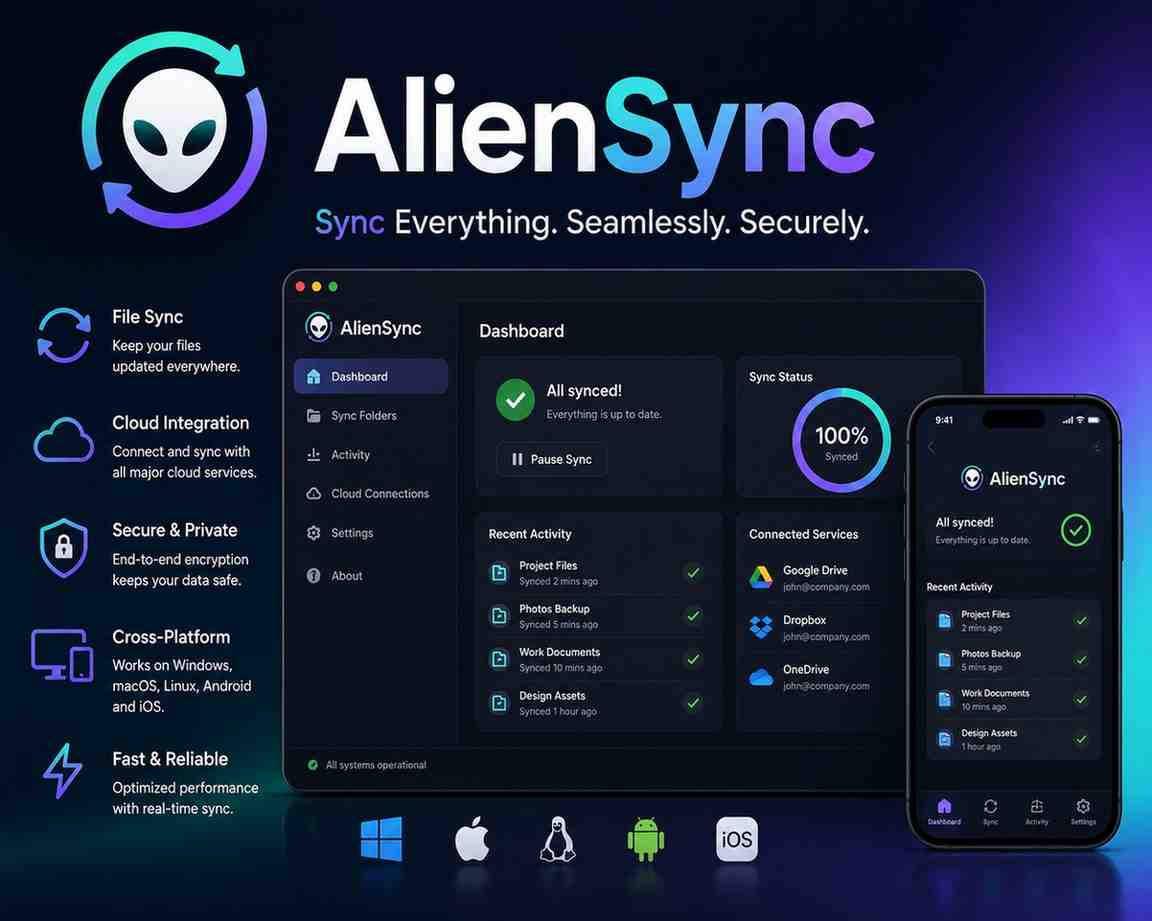
Businesses depend on software that connects departments, automates routine processes, and keeps information synchronised across multiple platforms. As organisations adopt more digital tools, the need for reliable integration solutions has become increasingly important. Apps and Software AlienSync represents a practical approach to connecting applications, improving data accuracy, and helping teams work with consistent information across their technology ecosystem.
Whether your business manages customer relationships, finance, inventory, human resources, project management, or cloud based applications, understanding how Apps and Software AlienSync supports software integration can help improve operational efficiency while reducing manual administration.
This guide explains how Apps and Software AlienSync works, where it can be implemented, the advantages it offers businesses of different sizes, and what organisations should consider before deploying an application synchronisation platform.
What Is Apps and Software AlienSync?
Apps and Software AlienSync refers to software solutions that synchronise information between multiple applications, databases, cloud services, and business platforms. Rather than requiring employees to manually enter the same information into several systems, synchronisation software automatically transfers and updates data according to predefined rules.
The primary objective is to ensure that every connected application contains accurate, current, and consistent information.
For many organisations, this means reducing duplicate work while improving reporting, customer service, financial accuracy, and operational visibility.
Why Businesses Need Application Synchronisation
Modern companies rarely rely on a single software platform. Instead, they often use multiple systems including:
- Customer Relationship Management (CRM)
- Enterprise Resource Planning (ERP)
- Accounting software
- Human Resource Management Systems
- Project Management software
- E-commerce platforms
- Inventory management systems
- Marketing automation tools
- Customer support software
- Document management solutions
Without synchronisation, each platform becomes an isolated source of information.
Apps and Software AlienSync helps remove these silos by allowing information to move securely between connected systems.
Key Features of Apps and Software AlienSync
A modern synchronization platform typically includes numerous features designed for businesses of varying sizes.
Real Time Data Synchronization
Real time synchronization ensures that changes made within one application immediately appear in connected systems. This reduces outdated information and enables departments to work with current data.
Automated Workflow Integration
Automation reduces repetitive manual processes. Once configured, workflows can transfer records automatically according to business rules without requiring user intervention.
Cloud Integration
Many businesses now operate entirely within cloud environments. Apps and Software AlienSync supports cloud-based software by connecting multiple SaaS applications into one integrated ecosystem.
Secure Data Transfer
Business information often contains confidential customer, employee, and financial data. Secure encryption, authentication controls, and permission management help protect synchronized information.
Custom Integration Rules
Every organization operates differently. Synchronization rules can usually be customised to match existing business processes without disrupting daily operations.
How Apps and Software AlienSync Works
The synchronization process generally follows several steps.
Step 1: Connect Applications
Software connectors establish communication between supported platforms.
These may include:
- CRM software
- Accounting systems
- Cloud storage
- Database servers
- ERP platforms
- HR software
- Inventory systems
Step 2: Configure Data Mapping
Fields from one application are matched with corresponding fields in another system.
For example:
Customer Name → Client Name
Email Address → Contact Email
Order Number → Sales Reference
Invoice Total → Financial Amount
Step 3: Define Synchronization Rules
Businesses decide:
- Which records synchronize
- Synchronization frequency
- Update priorities
- Duplicate handling
- Conflict resolution
- Error notifications
Step 4: Continuous Monitoring
After deployment, Apps and Software AlienSync continually monitors connected systems and processes updates according to configured workflows.
Benefits of Apps and Software AlienSync
Improved Productivity
Employees spend less time copying information between systems and more time completing valuable work.
Better Data Accuracy
Automation reduces human error and minimises duplicate records.
Faster Decision Making
Management teams receive accurate reports generated from synchronized information.
Reduced Administrative Costs
Manual administration decreases significantly once synchronization is implemented.
Better Customer Experience
Customer service teams gain immediate access to current customer records regardless of which platform originally received the information.
Industries That Use Apps and Software AlienSync
Many sectors benefit from synchronized applications.
Healthcare
Hospitals and private healthcare providers synchronize patient administration systems, appointment scheduling, laboratory information, billing, and reporting.
Education
Schools, colleges, and universities synchronize admissions, student records, finance, attendance, and learning management systems.
Retail
Retail businesses synchronize:
- Stock levels
- Online orders
- Warehouse inventory
- Customer loyalty data
- Payment systems
Manufacturing
Manufacturers connect procurement, production planning, logistics, inventory, quality assurance, and financial software.
Professional Services
Consultancies synchronize CRM platforms, billing software, project management tools, timesheets, and customer communications.
Common Business Challenges Solved by Apps and Software AlienSync
Organizations often experience similar operational issues before implementing synchronization software.
These include:
- Duplicate customer records
- Inconsistent reporting
- Delayed information updates
- Manual spreadsheet imports
- Repeated data entry
- Communication gaps between departments
- Inaccurate inventory figures
- Outdated customer information
Apps and Software AlienSync addresses these challenges through centralized automation and reliable application integration.
Integration with Cloud Applications
Cloud computing continues to transform business software.
Apps and Software AlienSync commonly integrates with:
- CRM platforms
- Accounting software
- Marketing automation systems
- Cloud databases
- HR applications
- File management platforms
- Collaboration software
- Project management tools
This creates a connected digital workplace where information flows automatically between departments.
Security Considerations
Security should always remain a priority when synchronizing business applications.
Organizations should consider:
- Multi-factor authentication
- Role-based permissions
- End-to-end encryption
- Secure API authentication
- Audit logging
- Activity monitoring
- Backup procedures
- Disaster recovery planning
A secure synchronization platform helps protect sensitive business information while supporting compliance requirements.
Implementing Apps and Software AlienSync Successfully
A successful implementation begins with a clear understanding of existing business processes. Before connecting multiple applications, organizations should identify how information currently flows between departments, where manual work is required, and which systems contain the primary source of business data.
Assess Existing Software
Create an inventory of every application currently in use, including:
- CRM systems
- ERP platforms
- Accounting software
- HR management systems
- Marketing platforms
- Inventory software
- Customer support applications
- Project management tools
- Document management systems
- Cloud storage services
This assessment helps identify integration opportunities while avoiding unnecessary duplication.
Identify Business Objectives
Every synchronization project should have measurable goals, such as:
- Reducing manual data entry
- Improving reporting accuracy
- Accelerating customer response times
- Eliminating duplicate records
- Supporting business growth
- Increasing operational visibility
- Improving compliance reporting
Clear objectives make it easier to measure project success after deployment.
Best Practices for Apps and Software AlienSync
Use a Single Source of Truth
Every business should identify which system acts as the master database for each type of information.
For example:
| Data Type | Primary System |
| Customer Information | CRM |
| Financial Data | Accounting Software |
| Employee Records | HR Platform |
| Inventory | Warehouse Management System |
| Projects | Project Management Software |
This approach prevents conflicting updates.
Standardize Data
Synchronization performs more efficiently when information follows consistent standards.
Examples include:
- Standard date formats
- Consistent customer naming
- Product numbering conventions
- Currency formatting
- Address validation
- Country codes
- Phone number formatting
Standardization improves reporting while reducing synchronization errors.
Monitor Synchronization Logs
Regular monitoring helps identify:
- Failed updates
- Duplicate records
- Permission issues
- API changes
- Network interruptions
- Performance bottlenecks
Early detection prevents larger operational issues.
Schedule Regular Reviews
Business processes evolve.
Periodic reviews ensure synchronization rules continue supporting operational requirements as software platforms expand.
AI and Intelligent Automation
Artificial intelligence is increasingly integrated into synchronization platforms.
Modern Apps and Software AlienSync solutions may include AI capabilities that help organizations:
- Detect duplicate records automatically
- Identify unusual data patterns
- Predict synchronization failures
- Recommend workflow improvements
- Automate document classification
- Improve customer segmentation
- Enhance reporting accuracy
Machine learning continues improving synchronization efficiency by adapting to changing business data over time.
Cloud-Based Synchronization
Cloud deployment offers several operational advantages.
Scalability
Businesses can increase capacity without major infrastructure investments.
Accessibility
Employees working remotely can securely access synchronized information from multiple locations.
Automatic Updates
Cloud platforms receive regular software updates, reducing maintenance responsibilities.
Business Continuity
Cloud environments often provide built-in redundancy, improving resilience against hardware failures.
Data Governance and Compliance
Organizations operating in regulated industries should establish clear governance policies.
These may include:
- User access controls
- Data retention schedules
- Backup procedures
- Audit logging
- Encryption policies
- Privacy compliance
- Record management
- Incident response planning
Proper governance helps maintain confidence in synchronized information while supporting regulatory requirements.
Common Mistakes to Avoid
Even well-planned integration projects can encounter challenges.
Avoid these common mistakes:
Synchronizing Unnecessary Data
Not every database field needs synchronization. Focus on business-critical information.
Ignoring Data Quality
Poor-quality information remains poor-quality even after synchronization. Clean existing records before deployment.
Overcomplicating Workflows
Simple synchronization rules are easier to maintain and troubleshoot.
Skipping User Training
Employees should understand how synchronized systems work and where primary information should be maintained.
Failing to Test
Comprehensive testing before production deployment reduces operational risk.
Future Trends in Apps and Software AlienSync
Business software continues evolving rapidly. Future synchronization platforms are expected to include:
- Greater AI-assisted automation
- Low-code integration environments
- Improved API connectivity
- Enhanced cybersecurity
- Predictive analytics
- Real-time business intelligence
- Cross-platform workflow orchestration
- Improved mobile synchronization
- Edge computing integration
- Advanced compliance monitoring
Organizations investing in scalable integration solutions today are better positioned to adapt to future technology developments.
FAQs
What is Apps and Software AlienSync?
Apps and Software AlienSync refers to software solutions that synchronize information between multiple business applications, ensuring consistent, accurate, and up-to-date data across connected platforms.
How does application synchronization improve productivity?
It removes repetitive manual data entry, automates updates, reduces errors, and allows employees to focus on higher-value work rather than administrative tasks.
Is Apps and Software AlienSync suitable for small businesses?
Yes. Small businesses often benefit significantly because synchronization reduces administration while allowing limited staff to manage multiple business systems more efficiently
Can Apps and Software AlienSync integrate cloud applications?
Yes. Modern synchronization platforms commonly integrate cloud-based CRM, accounting, HR, marketing, inventory, project management, collaboration, and document management software.
Is synchronized data secure?
Security depends on implementation. Organizations should use encrypted connections, authentication controls, role-based permissions, monitoring, and regular security reviews.
Conclusion
As organizations continue adopting digital technologies, maintaining accurate information across multiple applications becomes increasingly important. Apps and Software AlienSync provides a structured approach to connecting business systems, automating routine processes, and ensuring that employees work from reliable, up-to-date information.
Whether supporting customer relationship management, finance, inventory, healthcare, education, retail, manufacturing, or professional services, application synchronization enables businesses to reduce manual effort, improve operational visibility, and strengthen collaboration between departments.
By combining secure integration, intelligent automation, standardized data management, and scalable cloud connectivity, Apps and Software AlienSync helps create a more connected digital environment capable of supporting both current operational needs and future business growth.









Leave a Reply